Showing posts with label Cinema Language. Show all posts

Friday, 30 November 2007

Completed Story Board

1st scene
2nd scene

3rd scene

4th scene

5th scene


6th scene

7th scene

8th scene


9th scene

10th scene

11th scene


12th scene
Tuesday, 30 October 2007

Story Telling

"Story telling can be oral, traditional telling of a tale, visual as in an information graphy or movie; or textual as in a poem or novel."
(Lindell 2003, P.186)

Narratology
, the art of telling story.

Techniques
Diegesis- having a narrator in a story.
Mimesis
- not having a narrator but the visual will tell the story.


The Thirty-Six Dramatic Situations is a descriptive list which was created by Georges Polti who was a French writer from the mid 19th century to categorize every dramatic situation that might occur in a story or performance.
  1. Supplication - a Persecutor; a Supplicant; a Power in authority, whose decision is doubtful.
  2. Deliverance - an Unfortunate; a Threatener; a Rescuer
  3. Crime pursued by vengeance - an Avenger; a Criminal
  4. Vengeance taken for kin upon kin - an Avenging Kinsman; Guilty Kinsman; remembrance of the Victim, a relative of both
  5. Pursuit - Punishment; a Fugitive
  6. Disaster - a Vanquished Power; a Victorious Enemy or a Messenger
  7. Falling prey to cruelty/misfortune - an Unfortunate; a Master or a Misfortune
  8. Revolt - a Tyrant; a Conspirator
  9. Daring enterprise - a Bold Leader; an Object; an Adversary
  10. Abduction - an Abductor; the Abducted; a Guardian
  11. The enigma - an Interrogator; a Seeker; a Problem
  12. Obtaining - (a Solicitor & an Adversary who is refusing) or (an Arbitrator & Opposing Parties)
  13. Enmity of kin - a Malevolent Kinsman; a Hatred or a reciprocally-hating Kinsman
  14. Rivalry of kin - the Preferred Kinsman; the Rejected Kinsman; the Object of Rivalry
  15. Murderous adultery - two Adulterers; a Betrayed Spouse
  16. Madness - a Madman; a Victim
  17. Fatal imprudence - the Imprudent; a Victim or an Object Lost
  18. Involuntary crimes of love - a Lover; a Beloved; a Revealer
  19. Slaying of kin unrecognized - the Slayer; an Unrecognized Victim
  20. Self-sacrifice for an ideal - a Hero; an Ideal; a Creditor or a Person/Thing sacrificed
  21. Self-sacrifice for kin - a Hero; a Kinsman; a Creditor or a Person/Thing sacrificed
  22. All sacrificed for passion - a Lover; an Object of fatal Passion; the Person/Thing sacrificed
  23. Necessity of sacrificing loved ones - a Hero; a Beloved Victim; the Necessity for the Sacrifice
  24. Rivalry of superior v. inferior - a Superior Rival; an Inferior Rival; the Object of Rivalry
  25. Adultery - two Adulterers; a Deceived Spouse
  26. Crimes of love - a Lover; the Beloved
  27. Discovery of the dishonour of a loved one - a Discoverer; the Guilty One
  28. Obstacles to love - two Lovers; an Obstacle
  29. An enemy loved - a Lover; the Beloved Enemy; the Hater
  30. Ambition - an Ambitious Person; a Thing Coveted; an Adversary
  31. Conflict with a god - a Mortal; an Immortal
  32. Mistaken jealousy - a Jealous One; an Object of whose Possession He is Jealous; a Supposed Accomplice; a Cause or an Author of the Mistake
  33. Erroneous judgement - a Mistaken One; a Victim of the Mistake; a Cause or Author of the Mistake; the Guilty One
  34. Remorse - a Culprit; a Victim or the Sin; an Interrogator
  35. Recovery of a lost one - a Seeker; the One Found
  36. Loss of loved ones - a Kinsman Slain; a Kinsman Spectator; an Executioner
Point of View
- first person
- second person

- third person (usually on documentary programs or sensitive issue)


Plot is the events that happen to the characters in a story.

Plot Devices, something introduced into the story to advance the plot.
- items
- vision
- finales


Plot hole is a gap in a storyline that goes against the flow of logic set-up by the plot. Plot holes are usually seen as weaknesses and flaws in a story, and writes try to avoid them( except in certain deliberate circumstances, usually for humorous effect) to make their stories seem as realistic ans lifelike as possible.

Plot Structure, how to link everything together.

According to Aristotle's Poetics, a plot in literature is "the arrangement of incidents" that (ideally) each follow plausibly from the other. The plot is like the pencil outline that guides the painter's brush.

Elements of plot in a narrative
Initial situation - the beginning. It is the first incident that makes the story move.
Conflict or Problem - goal which the main character of the story has to achieve.
Complication - obstacles which the main character has to overcome.
Climax - highest point of interest of the story.
Suspense - point of tension. It arouses the interest of the readers.
Denouement or Resolution - what happens to the character after overcoming all obstacles/ failing to achieve the desired result ans reaching/ not reaching his goal.
Conclusion - the end of the story.


Dramatic Structure
Dramatic structure refers to the parts into which a plot of a short story, a novel, a play, a screenplay, or a narrative poem can be divided. Larger texts may contain several simultaneous plots that also follow this structure. The dramatic structure has been described by Gustav Freytag as follows:


Characters
, the actions and reactions of the characters drive the plot forward. Characters create their own realities as externalizations of their inner worlds in a sense.

Protagonist - somebody who carried the story
Antagonist - someone who opponents the protagonist
False Protagonist - someone who was thought as the lead character
Fictional - someone who does not exist

stock characters - sub characters

Genre, the main theme of the story. The theme is the invisible underlying universal- controlling idea, moral, message, concept, emotion, issue, essence or soul of the story.

Invisibility
, what the audience can not see. (form/ media/ content)


Mood
, the emotion.


Movement, the flow of the story.
- motion

- coherent
- logical

- sequence


Setting
is the location where the story takes place. It is a sense of time and place.


Related websites:
http://www.cla.purdue.edu/academic/engl/theory/narratology/modules/introduction.html
http://www.ericdigests.org/pre-921/story.htm
http://en.wikipedia.org/wiki/Story_telling
http://en.wikipedia.org/wiki/Narratology
http://www.exposure.co.uk/eejit/3act/index.html

Exe- The Future of Cinema

Research Exercise: The Future of Cinema

Write 250 words on the impact of digital technologies on cinema and adress the term digital/mobile revolution. (find examples of media projects, filmic texts or media clips supporting your argument)

  1. How do the following cinema projects (see below) address the theme of our module?
  2. How do the following projects differ from the traditional viewing experience?
Links:

Yobi - scene analysing

Referring to The Grammar of Television and Film by Daniel ChandlerUWA 1994 .


xxx

One of the interesting scene is this movie is when Yobi’s classmate called Yobi out from the washroom and warn her for keep on seducing Guem-ie. The animated film length is around 1 hour 25 minutes and 30 seconds.The scene happens at the timeline 00:46:11- 00:47:15.

In this scene, all shots are made in eye-level angle. There is not much camera movement except for slightly zoom in and tracking. Mostly medium shot/ mid-shot are being used when Yobi is talking with her classmate who has a crush on Hwang Guem-ie. The reason of using mid-shot is because when the two girls are talking, they have a lot of hand movements and different kind of facial expression instead of having too many movements on their legs as they are just standing there. Other than that, medium long shot is also being applied after Yobi’s classmate pointed at Yobi and listening to what Yobi going to say about herself. In this case, the purpose is to keep the social circumstances rather than just focusing on one character. It is also called as a two-shot since it is a shot of involving two persons at the same time.

Afterwards the camera is capturing Yobi instead of Yobi’s classmate because Yobi is talking and she is making those funny faces to cool down her classmate’s temper. The shot continues with a matched cut where the camera angle changed and turned to Yobi’s classmate having a frustrated facial look. When Yobi asked her classmate about the fact she is a fox, they use side medium shot so that the audience is able to see the hand gesture of Yobi.
The close up shot (one point view) cut towards Yobi’s classmate when she raised her hand and slap on Yobi’s left cheek, her hand reached near to the camera as though the camera is Yobi’s face. Then the reaction cut happened where Yobi is almost fell and long shot is being used to show the complete figures of theirs including the surroundings. Next we can see Yobi holding her face where a medium close shot is made to show her dramatic reaction when she turned her head over to her classmate and starting to smile again.


Later on long shot is being used again as both of the girls starting to have more body movement. Yobi’s classmate tilted her legs and clenched her fist, she is mad. This happened to be the most amusing part of this movie when Yobi’s classmate squad down and cried because Yobi misunderstood that a slap meaning that she loves her. The kicking legs of her when she sit on the ground and cried somehow portrays that she is somehow childish for having such negotiation with Yobi. The scene ends with Yobi bend down then squad down and comfort her with left hand. Yobi still not sure about what is going on; it is written on her innocent face.


As lighting can influence the audience approach towards a character or setting, soft and high-key lighting are being used in the scene to show sunny day. This bright image of the scene is characteristic of entertainment genre such as love comedies.


The use of sound in this scene is direct sound which is also called live sound which is created by the Mother Nature creature. Birds chirping sounds can be heard in this scene as the scene took place in day time, as sunny afternoon. Other than that, there are only the two girl characters talking sounds.


Sunday, 28 October 2007

Fieldtrip - Yobi the Five Tailed Fox

23rd October 2007
-write 250-350 words analyzing a scene in your chosen movie
(use the specific terms the grammar of television and film)
-to be presented in class next week

xxx
Tube: Waterloo (South Bank exit)
12:00 NFT1
BFI 51st London Film Festival

(Yobi official website)


Yobi, the Five Tailed Fox (천년여우 여우비) is a 2007 Korean animated film from Lee Seong-gang, the director of My Beautiful Girl- Mari. The film loosely draws upon the Korean folk tales of the kumiho.

Yobi is a shape-changing, magical creature. Being 100-years-old, Yobi is so young (for her species) that she has only grown five of her expected nine tails and when she takes human form looks like a young girl. A number of factors lead to Yobi spending time in a small boarding school where she finds being a human is rewarding and enjoyable.

With a fox hunter following her every move, Yobi must decide whether to follow a terrible ritual which involves stealing the soul of a loved one and will see her becoming completely human, or to leave the area altogether and return to her lonely life.

Reminiscent at times of the spirit and drive of Miyazaki, Yobi, the Five-Tailed Fox is fun, exciting and beautifully animated. It is a moving introduction to a place where cute aliens, multi-tailed vixens and people can live side by side. A world where the value systems within a relationship are understood and anyone or anything can make a difference.

The Trailer


one of the scene


Saturday, 27 October 2007

LU FUTURE Project Ad


Animation Studies 1 & Cinema Language


Aim
The advertisement should reach the target audience (everyone regardless of age and skin color)

Genre
Education, informative, modern

Synopsis & Treatment
The group's concept to LU Future project is pioneering the 22nd Century Global Education. As such, for the purpose of this assignment the central idea of the concept would be global. Global in this advertisement is portrayed as the multiple races with their traditional clothes focusing on the four continents of th world, Europe, Asia, Africa, and America.

The advertisement will have three young adults from the Asian continent and one from each European, African and American continent with a mixture of male and female, These six figures will be on separate screens and their figure will be divided into three parts; neck and above, between neck and waist , and below the waist. These three slots are then interchanged with the rest of the figures across the screen and will make it seem like their attire would jump from one screen to the next(imagine the three slots are like slot machine). Finally the attire will settle on their respective owners and the final image of all of them holding a degree or a certificate from Limkokwing University.

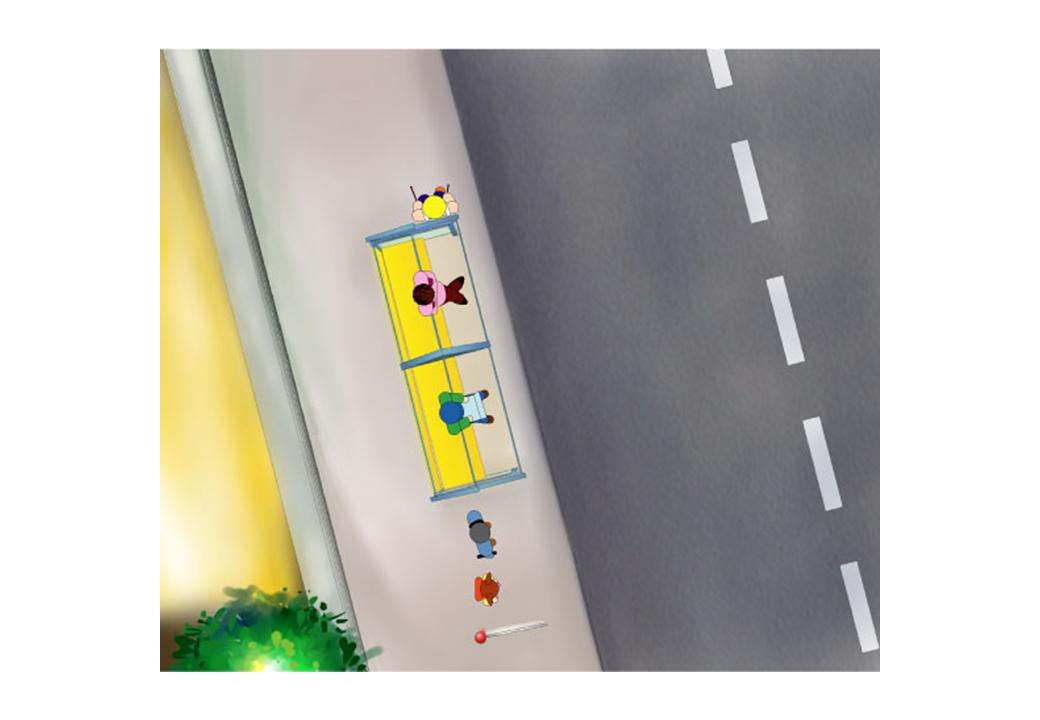
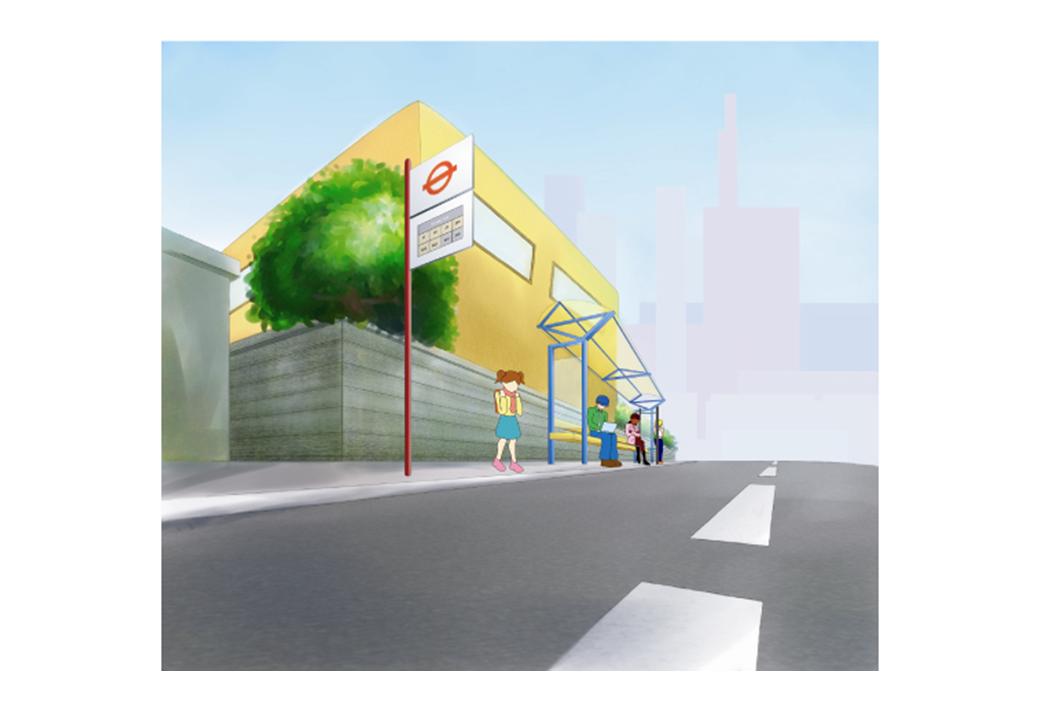
The second advertisement would be a group of people wearing in different kind of attire according to their occupation profession are waiting at a bus stop. They are from various countries and background where it can be seen by their skin color. There is a teenager boy playing aggressively with his laptop sitting on the bench. There is a long hair lady with trendy attire standing elegantly, she is a fashion designer. There is a guy standing next to her wearing in a black suit holding a T-square, he is an architect and so on. Half an hour has passed, many buses has gone by and none of them go up into the bus stop by earlier no matter how appealing those buses are. After a moment, a black futuristic bus comes. They starting to line up and all get on to the black bus when the bus driver opens the door. When the bus goes, there are people chasing from behind. The black bus is actually belongs to Limkokwing University of Technology. This shows people trust in Limkokwing University and it is a best university to pursue further education. This also show the concept of Globalization which Tan Sri Lim Kok Wing has always talked about.

Later on Shanon, Aaron and I will produce a series of animation based on the story board that will be done for Cinema Language module in which the purpose is to determine the timeline of whole advertisement video the LU FUTURE group project.


First of all, we will produce a story based on the written concept and synopsis. From there, we will develop and do the characters design including the background design via daily observation, flipping through reference books and visiting internet sites. Different colors will be tested which the purpose is to decide the best color to apply on the character/ object itself. Later on after everything is done, most probably Flash integrated with Photoshop and Illustrator, Shanon will start animating the characters. In between the process, the video will be played over and over again to ensure that the key frame is correct and work well with the timing. Besides that, light and shadow will be applied so that the animation looks livelier. We will also insert some relevant background music to make the animation more interesting. Other than that, text and effect will be added in to convey the message. In this case, we might modify and insert the typography animation that we are doing now in typography class.


Production Role

Zaim – Scripter, Copywriter

Aaron – Storyboarder, Environment Designer

Xuan – Character Designer, Colour Coordinator

Shanon – Animator, Music Composer


Chosen Medium

Television - Audio & Visual
Screen - Interactive & Visual
Projector - Visual

Research & Progress

-Downloaded PR videos and tutorials
Some print out notes.
-Collected booklets from gallery.
-Cut outs from newspaper.
-Captured photos.

-Websites about animation and London future.

:: http://www.limkokwing.co.uk/

:: http://www.idleworm.com/how/anm/02w/walk1.shtml

:: http://www.anticz.com/Walks.html

:: http://animation.about.com/

:: http://www.tutorialized.com/

:: http://www.londonnet.co.uk/ln/guide/themes/future-london


Technical Skills

-Photoshop
-Illustrator
-Audition

-Premiere Pro

-
Flash

-Hand draw (art line pen, pencil, colour pencil & water colours)

-Photography

-Typography

Timeline (click to view)


Presentation Feed Back on 16th Oct 2007
- treatment
- ad synopsis > people approach/chase the bus instead of waiting at the bus stop
- tv ad > on air time > timing
- strong visual to convey the message
- difference of all university college in UK
- mobile commercial > screen on bus

Monday, 8 October 2007

Research

History of Multimedia

Definition of Multimedia


Future Cinema (1)

Future Cinema (2)

Future media


The Future of Animation


Below is the random words i got from my group leader while meeting with her this morning in campus.


Branding
advertising
expanding

Building new character
Renewal

Maintaining the existing
Regeneration
Think beyond the box


The conceptual idea for the new campus

Square- basic
Mysterious
Deform

Sunday, 7 October 2007

Whirligig

At the first day of Max's class, we were brought to an art gallery named Red Gate at Brixton to see an exhibition entitled 'Landscapes of the Self''after a short brief about related modules. The artist's work that he showed us is Fiona Carson- Whirligig. A 15 minute video exploration of the textile constructions of Fiona Carson was also filmed by Max Schleser and with the accompanying electronic music by Dithernoise.

xxx


Whirligig
Fiona Carson has been working with fibre for the last twelve years. She uses it to explore a landscape of the Self, which has been shaped by motherhood, feminism and psychoanalysis. Her shapes derive from dream catchers, female body shapes, nest, and vessels. She is interested in objects that have an enigmatic presence or ritual function.
“I like the chaotic energy, vitality and density of organic forms. Placing my work in the landscape led to the creation of the video Whirligig made with Max Schleser and Simon Longo, which documents a mysterious encounter with my work in the ritual space of a pergola in Golders Hill Park.”


The Backgroud
by Sue Manchoulas
Her work draws on her background in music composition, to give expression to the world around us in a complex layering of rhythms both sonic and visual. Using found sights, sounds and materials from the mundane, she constructs a new visual/sound world experience for consideration.


These pictures are made by
Yewande Okuleye.

Her art practice is based on the itinerant studio. She travels to spiritual landscapes; altars, shrines and sacred spaces. On return, the artist works with olfactory scientists to create a scent. The scent is like a secret fragrant fingerprint of her impressions, experience and memories unique to a particular time and place. The scent is reconfigured into visual language. The fragrant doodle series uses digital drawing software to explore the relationship between the olfactory sense and embodiment.


Below is an art piece done by another artist name Ann Haycock.

She lives and works as an artist in Cornwall. Her practice incorporates installation, video and performance. The starting point for her work is an everyday object or activity. These are used to explore moments of action and reciprocal, sometimes unexpected reactions. Viewing Ann’s work one experiences a juxtaposition of melancholy and an understated humour.


Group photo taken by Max before heading back to campus.

For further information about Fiona Carson's Whirligig, pay a visit to Whirligig Website.